Tuesday, April 27, 2010

Blog Shout…long overdue.

One bloggy detail that has gone overlooked for so long is an official shout out to the three or four ultra fabulous readers of Coloradocastersblog@blogspot.com. I have been meaning to do this for a while. Now that I am getting things rolling this season, it would be best if I get this out now.

Mel: Mel really deserves special thanks and a huge shout out for the comments and most of the followers from blog formats of various sources that have stumbled over to my blogilicious. Blog Cabin Angler is as good as a blog gets with a mix of humor, news and of course fishing stories. Mel, you are the best. I wish you well and of course magnificent fish!

Biggerfish: This is a hard-core trout guy from Montrose that lives up to his blog title. He mixes a little bit of spin with masterful fly-fishing and the fish p0rn is downright fantastic. Give his blog a check, follow and a kind word now and again.

Fall Road Archer: Bill is a true outdoor sportsman and keeps a wet line when not out hiking, scouting or hunting the woods of Pennsylvania. Bill is an active poster with an eye for photography.

You can view any of these blogs by checking the folks on my follow list. Check these folks out and see the quality of effort they put forth.

Another blog worth mentioning

The Fisherbabe: Here is a gal that paints her own lures and then throws them at 6-foot long pike. Practically every fisherman’s dream but sorry guys she is already married. I follow her blog at a distance and even comment once in a while. Of course she won’t so much as give me the time of day but I daydream that one day she will comment on my page as well as add me to her blog roll. “Yeah right. Keep dreamin’ Mattsabasser.”

http://www.fisherbabe.com/

And as always, special thanks to Don, James and “Mountain Goat Keith” in which another fishing trip is long overdue. (Sigh, so little time to fish these days.) Shoot me an e-mail to set something up. Plan a few weeks ahead and put “Stole the keys to Denver Water” in the subject line. I may have left one or two folks out but know that every view, comment and rate does not go unnoticed. Thank you so much for stopping by.

More bla bla bla….

Epilogues and English Majors: a correction of sorts.

One of the long battles that has brewed to harsh words and near fisticuffs for me at times is the word and definition of “Epilogue”. For the longest time I have argued, debated, hashed out and verbally tangled with a fellow co-worker that just so happens to be an English Major over this word.

For over two years now I have used the partial definition “narrative by author” for the word “epilogue” at the beginning of my posts. Epilogue actually means narrative by author at the END of a story. Realize I am more stubborn than anything and just think epilogue sounds a lot better than “prolog”…Or maybeez I iz jusd eelitterit. The good news is that I finally capitulate and surrender my false use of the word. That is kind of a bummer for me as I don’t see myself writing an epilogue for any reason and will rarely see that word again. Man, I am really going to miss that word.

In closing, thanks to everyone for the views, comments rates and further support of the Coloradocasters blogilicious. If you have not gone through my previous posts, rants and fish pictures…by all means do so.

Good luck and keep on bloggin'.

Monday, April 26, 2010

Saving California Steelhead-Dammedif you do-Dammed if you don’t

MALIBU, Calif. – In hopes of luring the endangered steelhead trout into the Santa Monica Mountains, California's transportation agency is planning to spend $935,000 to pave over part of a popular beach with cement and boulders to build a freeway of sorts for fish.

The project is the latest, yet far from the most unusual, steelhead recovery attempt by government agencies that have spent millions of dollars on concrete fish ladders, cameras, fishways and other contraptions to allow seagoing trout to spawn in Southern California streams.

The problem, even some conservationists say, is that there is little evidence construction efforts since the 1980s have done anything except absorb taxpayer dollars. The work to save the species has led to about a dozen concrete fishways at a cost of more than $16.7 million.

A $1 million fish ladder — a structure designed to allow fish to migrate upstream over a barrier — may cost $7.5 million in stimulus funds to rebuild. Another fish ladder would require fish to leap 8 feet to reach it. Studies alone for replacing a third ladder have cost an estimated $3 million.

http://news.yahoo.com/s/ap/us_freeways_for_fish

Matt’s Rant: Environmental issues get pretty heated on both sides these days and with good reason. Humans don’t tend to realize the impact they make until it is too late and then the method to repair the damage takes a lot of money with little impact at first glance. In many cases it will take decades to see if we have made the right moves or not.

Some of the projects existing and proposed have many aspects that should be scrutinized, analyzed and discussed. I understand that the price tag of this species conservation can be staggering and bordering on the verge of ridiculous. To most people in the United States one silly little fish species may not be worth millions of dollars to save. But to steelhead anglers…no dollar should be spared for such an amazing trout species that is wildly unique. I tend to agree with them but my opinion as an angler may be biased.

In the case of California Steelhead, both arguments have flaws. The argument against the waterway projects does not offer a solution to the problem where as the “pro” side desperately needs to firm up their science and documentation on the subject. They need to be able to prove beyond a shadow of a doubt that efforts are working, even if to a small degree. This recovery is still in its infancy so major results right now should not be expected.

Another element to these projects that is being lost in the discussion is the fact that the ladders, fish bridges and diversions help return a lot of other natural elements to the river such as sedimentation. It also helps regain the original aspect of the river flowing from headwater to delta.

Potential for more trouble like easier invasive species introduction, less control in regards to flooding and of course spending a heck of a lot of money are concerns that must be addressed as well. Personally I think some of the California designs go a bit overboard in a few aspects, which is common for bureaucracies. Dealing with the existing landscape will be another massive obstacle.

In closing, the one thing you can count on regards to conservation and undoing the damage or harmful changes that we as humans have caused is that there will be plenty of argument, debate and discontent on both sides. There is a middle ground and hopefully both parties will reach that ground, shake hands and smile. Then cast out for monster steelhead.

Your thoughts?

Sweet bucket on a mixed-bag weather day

(Above: Sweet bucket on a “mixed-bag” weather spring day in Colorado. I do not control the weather and have to fish through whatever comes my way.)

Can you believe we are still getting snow in Colorado? I drive through a near whiteout and then fish for bass. Yes I know…its lunacy. My only hope was that water temps would carry over from the past few days when everything was so sunshine sparklingly and warm.


This is the snow I faced going up I-70 trying to fish Clear Creek up by Idaho Springs earlier in the day. Fish for an hour or so with no bites, flashes or follows. Back on I-70 and head back down to Denver.

Finally reach the pond and the shoreline is wet but not too muddy. I feel the water and it is warm. Work a few areas and nothing. Moments go by as I work every nook and cranny of water trying not to get discouraged. Fishing is as much of a mental game with yourself as it is test of knowledge, skill and fishing conditions.

One the way back I take a second cast structure that had been a no-go earlier before. I feel the bump on the line like a small tremor of electricity to my hand. My elbow springs back the hookset and my lips mutter that common phrase, “Come on baby. Hold on!”

The fish was landed and released quickly after a short photo op. A small hike out, back in the truck and then return to blizzard watch. Never a dull moment with the weather in Colorado this year.

My name is Matt and I’m a fishaholic.

Wednesday, April 21, 2010

Chasing Pike through Morning Fog

7AM with a heavy fog rolling across the lake. Blustery winds delivered a cold mist of rain that stung the scars of this lingering winter. With waders and gear I set out in the fog after pike.


The access to this lake is limited so when the gates do open to anglers we tend to run, not walk to the shoreline. There is a slight crowd but tolerable. My plan is to move past the crowds and find an isolated spot to fish.

(Above: The prime real estate goes fast. I try to show up early and pick a few spots on the dam before heading down and picking spots as I go.)

I find a spot and start casting. First the spoon and then the jig. Within minutes I feel the heavy surge that is unmistakably a pike. The battle ensues with a mixture of heavy force, almost dead weight and then ripping flight through the water. A few moments later and a toothy fish is landed in the 24, maybe 26-inch range.

(Above: Started the day out with a number of these guys. A little on the skinny side but otherwise in decent shape. Jevan from Team JW gets credit for this shot. Thanks again, man. Good meeting you out there.)

Lure of choice is metal spoons anywhere in the 4 to 6” range. Some throw bigger or smaller for various reasons but I tend to start with a good 4” kastmaster and work my way up to krocodile spoons in copper or firetiger. I am throwing these lures for distance as much as anything else out here.

With very little water open on the front section of the lake I decided to venture out to the back section. The pike have hammered the forage base of this lake and crawdads have turned out to be somewhat of a staple in their diet. I throw large jig patterns in the back section and occasionally get strikes. On this day through the early morning fog I tossed out and WHAM! This guy put up a much better fight and made the drag sing loudly once or twice before submitting to the shameless photo op and release.

(Above: Getting some better pike in the cattails but nearly losing the camera in the process.)

I caught one more pike that was as long as the one shown above but just a little bit fatter. There was just no way to get quality footage without risking camera gear. Getting great photos and video wading deep into the cattails is real tough solo. Maybe some sort of pole tripod that stuck in the ground maybe. Hmmm. I will have to try that next time.

Pike can store an enormous amount of swimming strength in their body. Combined with their long sleek shape and streamline tale fins the pike can show explosive fighting power for the sport angler. Added with the fact that this fish has about 20,000 razor sharp teeth it makes the northern pike an amazing sport fish.

My name is Matt and I’m a fishaholic.

Tuesday, April 20, 2010

Lake Cleanup – Adopt a Lake Program

The weather has put my cleanup on the backburner this year. Now that the blizzards have slowed down and the ground does not resemble muddy quicksand I plan to fulfill some of my cleanup promises. Here is an update on my lake cleanup progress.

One of the lakes that I fish in the southwest metro area tends to collect a lot of trash from wind and less than scrupulous visitors. The bait cans, bottles and other debris can really take fishing quality down a notch. It was unsightly enough that I added this fishing spot to my list of places that receives a cleanup once a year. After annual trips the trash seems to get less and less. The real payoff is not having to trip over all that trash throughout the rest of the fishing season.

(Above: Huge stiff-arm hold on a half full 33-gallon Hefty Bag. Less trash makes better fishing. For me, this is Catch of the Day!)

Organized annual cleanups are one thing. In other cases I do what I can without dropping everything and turning into a one-man sanitation crew. Take this next situation where originally my plan was to drive all this way and get some footage of crappie. The fish were not in spawn mode and the cold front was making conditions from shore a bit soggy. After scouting\casting a few sections I decided what this place really needs is some cleanup.

(Above: This is the before shot. The bag that I used is shown towards the upper right of this picture. I could not get the entire area in the photo but you get the idea.)

Disrespecting nature should not be tolerated and a lot of people complain about it including me. The real trick is actually doing something about it. Now that blizzard season is nearly over trash season is underway.

(Above: This is the area after a little cleanup. We are talking only a few minutes worth of effort here.)

The before and after shots really show what a difference a little effort can make. Cleaning the entire lake would have taken all day and filled a large dump truck. Cleaning two or three sections was something I could do without trash bags and a dumpster service.

I strongly urge folks to adopt the local lakes in their neighborhood or areas that have fished well. Less trash and more fish makes for better fishing so picking up trash along with catch and release are some of my favorite fishing philosophies. It is also a good way to ensure a quality experience for future generations to come.

Good luck and good fishing.

Tuesday, April 13, 2010

Don and the Windy Shelf Pig

I have said it before and will say it again: When Don is in the groove…watch out! Don predominantly throws big fish baits for big fish. This method doesn’t always come up money but when it does it is often in the OMG Class.

Out on the water and we have been search casting for an hour or so. Action is slow but we are still determined. Wind was choppy at times and practically nil at others. As the day rolled on we searched the areas that had produced fish before. This is a staple rule in the Mattsabasser book of fishing. But what do you do when those spots don’t produce? Answer: you turn the page and start with a blank sheet. Take in all the pieces of the puzzle and go from there. At this point we had fished half the water or more and merely set the hook on a few rocks and sticks. Then we move to the other side of the lake and some wind kicks up. Don takes two of the fish puzzle pieces and slams them together.

“Right there. That submerged shelf. The wind is blowing right across it now.” He didn’t even finish the sentence. Simply hit the electric motor and put the boat about twenty feet behind the shelf and facing the wind.

Dropped anchor and we began running gear across the shelf with the wind and current. Don casts out and WHAM! His rod bends over with a heavy fish on the end. The fish wanted to stay deep and lunged downward several times.

“This is a big fish.” Don replied through gritted teeth. “This is a big fish.” Realize that Don generally says two things when a fish is hooked. The other is “Dink…it’s just a dink.”

Then the water boils with a break of the green scaled, shiny finned brute. It was close enough to the boat that you could see both eyes looking right at you. The fish vanishes and tries to surge downward. Don turns the head of the fish and steers it back to boat. Then the reach, the grab and enjoy sweet success.

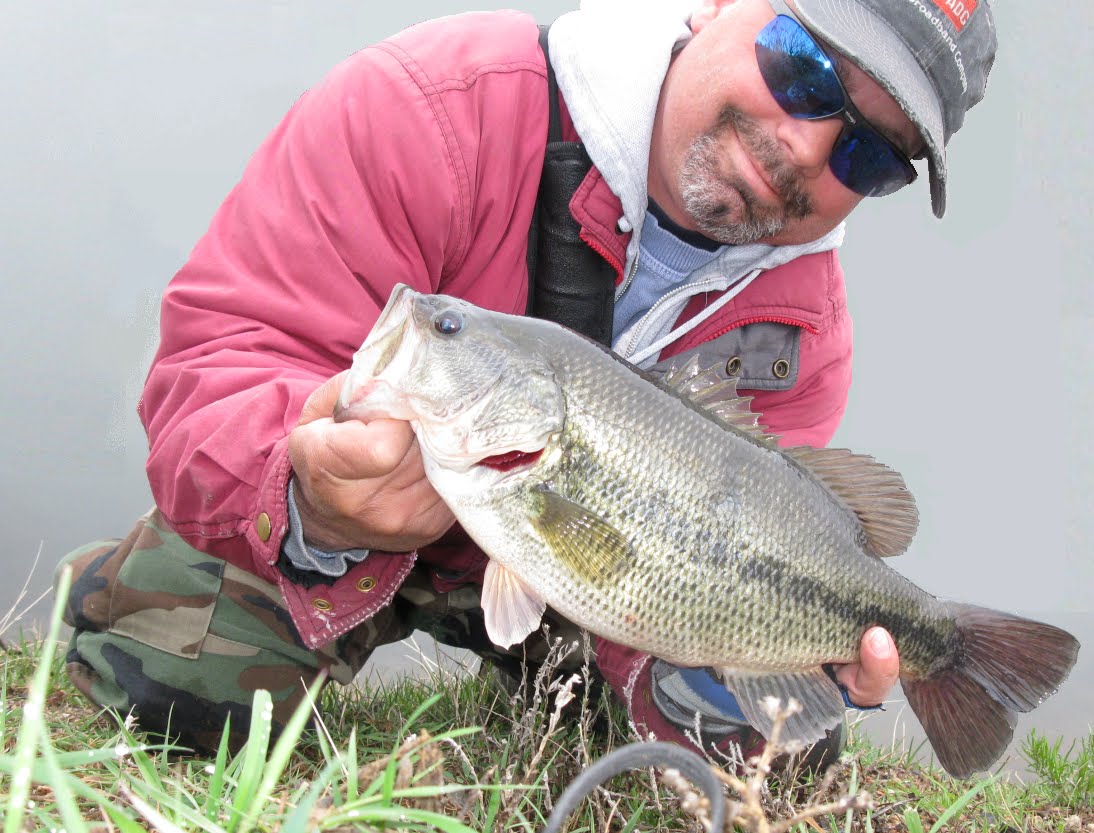
(Above: Stuffed to the gills and in prespawn glory this fish is PLUMP! Notice the break or ridge before the tail section. Sure sign of bloating and overall Pig-iness. Great Colorado bass specimen!)

Shameless fish bragging aside, the wind and the shelf was the key. I have gone a little overboard here to illustrate and explain why the wind and shelf was such a productive formula for fish. We may have a few more weeks of windy conditions here in Colorado to fish through. Wind is not necessarily a bad thing if you can use it to your advantage.

Wind can create a lake current similar to that of a slow moving river. Fish have to fight against this current to stay where they are or move to areas that will save them from expending the extra energy. When wind levels increase, the fish will look for areas of shelter. A similar concept would be humans standing in a heavy breeze. They have to use energy to maintain balance and physical comfort becomes an issue. Unless there is a definite reason for the person to stay out there (work or uncompleted task for example) the person will move indoors or seek shelter from the blasting winds.

In the case of our fishing, the wind was gusting at times across the lake pushing baitfish and other creatures from the shallow water across the shelf and into a deeper pool. The larger fish congregated off the edge of the incline to help avoid the moving current. Here they could wait using minimal energy and feed on anything that came over the shelf.

(Above: Simplistic illustration of baitfish being pushed out of the shallow water and into the deeper pool. Originally I had more lines showing the circling current flow behind the shelf incline but that made the illustration a bit too busy overall.)

Don would cast out and then bring the lure over the shelf and into the deeper water. If the fish were there he would get a strike. The bites were timid or from the side where the hook doesn’t get a chance to hold the fish. All you can do is throw for what you are worth and be ready to set the hook. On this day it seemed that you had to nail the hookset on the first strike. There were no second or third strikes on the lure and with the fish only allowing one pass through the area it was slow and tough going. They might as well have hung a “No Free Lunch” sign at the boat ramp.

Something else worth mentioning was maximizing the lure within the vertical water column. This was done with a raise and drop presentation shown below. The fish are still a bit sluggish and not willing to chase anything down more than a few inches or so. Keeping the retrieve as slow as possible while maintaining proper action of the lure will increase the strikes compared to the “cast out-rip back” method.

(Above: Yet another illustration showing the desired lure path over the shelf. In hindsight I should have spent a little more time on the lure. Consider this lure the “Scruffy Shad” highlighted many posts ago.)

In closing, it is sometimes good to set aside my own selfish fish bragging to highlight that of a friend. Truth be told my fishing results were two shades south of dismal. I missed one hookset early in the day and then lost a big fish at the end of the day. The difference between losing a fish and missing a hookset is huge in my book. Having a fish on the line for a count of say two-Mississippi and then having it come off generally leans toward a mistake being made during the battle itself. Rod position, reel drag and everything else comes into question.

“Next time my green scaled-shiny finned friends…next time.” My lips mutter as we were forced to roll off the lake due to time, increasing winds and low battery juice.

My name is Matt and I’m a fishaholic.

Friday, April 9, 2010

Small Ponds on the Shorebang

For the last few days the wind has been gusty and formidable. The forecasts were predicted at a mere 10-15mph that felt more like hurricane “Hugo” when exposed out on the open water. The next day was foretold to be even worse. Rather than battle the whitecaps and the wind onslaught on prime water by boat, I decided to give my arms a rest from rowing and go for some bass in shorebang mode.

My water of choice was a large grouping of small ponds in Boulder. Small metro ponds can offer some big fish opportunity from shore. This area has several ponds that vary greatly in water clarity, shape and overall size. Generally the bigger ponds all have fish in a mixture of bluegill, bass and carp. My goal is to get in early and cover as much water as I could before the winds picked up.

“The last few days of wind may have already congregated fish.” I thought to myself. “Just have to check it out.”

I get to the ponds and the water is like glass. Not so much as a blade of grass is twitching. This was by far the least wind that I had faced for the previous three days. Now that I had the pontoon boat safely stowed away the winds were content to take the day off it seemed. Another thing I did not fully take into account was the fact panfish such as bluegill would be active so early in the year. I was able to pick off a handful or so of these finned-forage morsels just about every cove or tasty pool that I went to. A few had brilliant coloring and fin quality. Panfish are a bit of a compulsion of mine to put it mildly.

(Above: Two-point deduction for not cleaning the muck off this fish before taking the picture. Dirt, sand, and even moss debris can take a lot away from fish shots in my opinion. Instead of noticing the amazing color of the fish, viewers will be drawn to the negative aspects even if it is just a few specs on the tail.)

The water temps are still clinging to the 50-55 degree range on most ponds but my guess is a few of these smaller ponds are climbing towards 57-58 during a warm spell. Maybe these smaller gills are moving in to feed and even spawn. Bass were tough to come by while scouting most of the water thus far so I would pick off a few of these guys here and there.

(Above: Bluegill with fins on full display. I may have to start calling these fish “potato chips” as I can’t ever seem to stop at just one.)

Shaking off the panfish addiction I went back to my pursuit for bass. “These winds will kick up in no time. Then I will have to adjust accordingly.”

Being able to adjust is key as Colorado is always changing. Wind is not necessarily a bad thing for anglers. In fact wind can be a good thing if you use it to your advantage. However the irony of having absolutely no wind on the one day wind mattered the very least did not go unnoticed.

“Guess I should be happy it’s not @##%^& snowing!”

Fishing by shore presents advantages and disadvantages. One of the major disadvantages is that you are greatly subject to the terrain. Fish love rough terrain and heavy cover where available. Fishing this heavy cover can be much more difficult from shore than by boat. Often I am met with the quandary of “to cast or not to cast”. Some places require finesse as where areas like this spot are absolutely treacherous.

(Above: Sight-fishing opportunity in Rough Cover. Do I jump down and spook the fish or try to cast through the cover?)

Casting would be folly. Instead I retreat taking the sloping trail at the bottom of the picture. Slide down and nearly break my @##. Perfect cast, drop…nothing. On the slope I could see the fish but the lower angle reflected light directly into my polarized lenses. I was blind of sorts. I halt the retrieve and give the bait a few pops of subtle movement. Nothing. Cast. Cast. Switch rods, cast and cast again. Nothing. I go back up to the top of the slope. The fish had moved off. Sight-fishing in spring. Not always easy.

Then I move to the wooded spot and see a dark shadow cruising slowly. It was as if he was trying to sneak up on a school of bluegill nearby in the shallows. I cast ahead of the fish and run the lure in the shallows near the fleeing baitfish. The shadow lurches forward.

Now I see it more clearly, a decent sized bass. It leans forward and opens it’s mouth. As soon as the jaw shuts I set the hook. Here is where it gets a bit dicey. You see, I hadn’t actually moved down to the shoreline from the top of the hill before casting. There was a good ten or fifteen drop to the water’s edge. Two things were going to happen for sure…one; I would lose the fish and two; I would fall right into the water. Instead my feet miraculously stayed underneath me and my reel maintained the slack. With one good tug the fish was steered towards shore and my hand reached for the lip. As I grabbed the fish the lure literally fell out of the fish’s mouth. Had I offered any slack whatsoever surely the fish would have been lost.

(Above: Ugly Mug Bass that could actually pass as part “frog” in my book. Man, how @##%^ old is this fish?!?”)

The wind did not show up until later in the afternoon. By the time my truck pulled into the house; dogs, cats and garbage cans were whipping through the neighborhood at about 40mph. Some anglers can plan fishing trips and the fishing gods will have the turbulent weather lay down right in front of them like a good dog. They will experience perfect weather and conditions the whole time. That is not usually my case. I could pencil in a trip with clear blue skies and then the weather will turn south faster than bad cafeteria food. What makes this day a bit bizarre is that the weather defied all the worrisome forecasts and was rather pleasant…on the one day I planned for it to be terrible. That is just fishing. All of the fish in this shameless fish bragging post were released.

My name is Matt and I’m a fishaholic.

Photos from the field

Through my adventures photos are taken that never seem to make it into specific fish posts. So much of my fishing goes unseen or heard. Even though these pictures may not be ready for prime time fishing posts, I still add them on occasion to shamelessly pump up the post count on my blogilicious. And with that I submit to you…Photos from the field.

Hidden Driveway

Winter this year has been a real mudder ducker. The snow levels have been above average and even though it’s a real pain in the axle to drive in…the watersheds around here need this extra moisture. Times like these it often helps to look on the bright side. At least you don’t have to shovel this guy’s driveway. (see picture below)


These are all pictures that I have taken myself using my new Canon Powershot A2000 IS. So far this thing is doing real well with the pics and ok for the video. Video quality is still better than my POS Koda-smack that was rendered useless after a few minor tumbles. Check back with me in a few months and see if the Cannon is still keeping up.

Eagle Eyes

Below: I was blessed with a great shot of a bald eagle perched a few hundred feet away from me while fishing on the tooner. This is just a basic zoom shot against a cloudy background. I am still amazed that this shot turned out so well.

This raptor was eyeballing me pretty hard. After a while I figured this bird was thinking one of three things:

1. “I wish this guy would hurry up and kill a fish. An easy breakfast would really turn this cold morning around.”

2. “Hmmm…wonder if he has any live bait in that tackle bag? Everyone else brings a minnow bucket. I could go for a bucket of minnows right about now.”

3. “One talon swipe and that red pontoon boat is scrap rubber.”

Elk and Bison…Hooves on the Landscape

The Front Range is an amazing place with all sorts of wildlife opportunities. It is almost as if the deer and elk sightings are daily commonplace. Unless it is hunting season of course. Below is a gratuitous elk shot snapped from a “local herd” a few days ago. Made it through another cold season.


Deer, elk, coyote and other sightings occur enough that they blend into the common landscape. Something becoming more common (at least for me in my travels) are sightings of bison. A few ranchers raise sizeable herds of these “Buffalo” for profit and it really gives Colorado that old western feel. Bison “on the farm” here in Colorado comes with some controversy. In this case shown below, only a small fraction of this herd is culled for profit every year. The majority of the herd is kept intact (as recommended for the social benefit it provides to the herd overall) and the numbers have grown over the years. Bison are kept far away from cattle (to spare transfer of certain disease and bacteria) on a large expanse of land maintained by the owner.

In my view this is an example of where profit and conservation of a large midwestern animal (that was once nearly extinct) can go hand in hand. Not a perfect example to be sure but better than protests on both sides that solve nothing and confine these creatures to only Yellowstone National Park.


In closing I want to say thank you all for your comments, rates and patronage on my blogilicious. This will be my second year on the blogspot scene and I truly hope that my viewers, readers and even the occasional passer-by take a moment to soak in the humor, sarcasm, shameless bragging and of course the sense of adventure that I try to pour into every other post or so.

My name Matt and I’m a fishaholic.

Tuesday, April 6, 2010

Early Prespawn Buckets- An “Easter Bass” Special

Air Temp: 50-60 degrees
Wind Speed: Gusty winds 10-25mph.
Water Temp: 54 degrees
Water Clarity: Clear
Fished from 8:00 AM to 3:00 PM

The stick bait is cast out and left to sink deep down through the clear blue water. It is early in the day battling winds of up to 20mph off and on. I reposition the boat with the left oar as my line gets a heavy tug. My hand quickly lets go of the oar and helped the right hand set the hook.

“Hold on, baby!” I mutter after losing one good fish today already.

In moments the fish was landed and it was forced to succumb to one my shameless photo-ops. Because this experience is taxing enough on the fish, I tend to forego the measurements and weighing. Easily a +18-inch fish in the 3.5lb range.

(Above: Every once in a while I catch what is dubbed a “beauty fish”. The new camera captures the fantastic color of this Colorado prespawn bucket.)

The early prespawn can be as rewarding as it is challenging. The fish are fairly stubborn for the most part but make up for that stubbornness in bulk. I tend to find some of my heftiest fish this time of year. The fish are still deep and waiting for things to heat up before they get very active. The bite is a bit sluggish as well and it seemed like I had to be ready to nail a sturdy hookset right off the bat or lose the fish.

(Above: A couple solid chunks like this made fighting the wind all day a bit more bearable.)

The stick bait was the only lure that got any attention for me. I worked two rods and alternated a few jigs and swim baits to no avail. The rigs had to be worked slow and fish would hit with one thump, maybe two. There was a layer of moss an inch or two think on the bottom. Next time I will have to run a drop shot and see how things go.

My name is Matt and I’m a fishaholic

Saturday, April 3, 2010

“Hey! You kids have permission to fish there?”

During my early season bass scouting I stumbled across some misguided youth that had fallen off the path of right and wrong. These two youngsters had in fact strode so far as to cross two fences leaving their tracks in the snow to fish a pond on private property. They were tucked into the northeast corner out of sight from the large farmhouse located closer to the road on the east side of the lake. I watched them fish like spooked pheasants for a few minutes before yelling, “Hey! You kids have permission to fish there?”

(Above: It doesn’t take a forensic expert to diagnose the crime scene here. But for just for fun I went ahead and did my own CSI markup.)

Kid One just kinda looked at me and then his friend to the right. I had to ask the question twice before he called over to his buddy “Rick”.

“My friend said we could fish here.” Kid Two replied.

“What is your friend’s name?” I continued to drill these kids really just for the fun of it.

Long pause. No answer.

“Ok, I’m gonna give Mr. Baker a call here and see what he thinks.” I said pulling out my cell phone and walking to the public access ponds just a few hundred feet down the trail. The kids waited for me to get further down the trail before hopping back over the fences and retreating to where Mom was parked off the side of the road.

This was not something I wanted to get Operation Game Thief or even the local authorities involved in. One good scare should do the trick and maybe next time they will do the right thing and ask permission. At the very least they will think twice before jumping this private lake again. The landowner (whose name is not “Baker”) has donated the land and ponds to the west of here for public use. Fishing the two ponds he still keeps private is a bit of an insult to all of us who enjoy the newly added ponds. To return the favor we should all help keep an eye on the private ponds for trespassers as well as keep the newly added public ponds free of trash.

My name is Matt and I’m a fishaholic.

Adjusting gears-Comments, rates and tweaks going forward

(Above: This picture is a metaphor of sorts in regards to the complexity of the Internet and all things technological. (Sigh) Actually I wish those things were half as easy as this picture.)

Early in my blogging I was so glad to get any feedback at all. Even the spamming Asian p0rn ads made me happy to get attention outside the handful of family and co-workers that have shortcut my blog or the local fishing forum community that occasionally drop by. These spamo-comments of course were deleted as soon as possible, meaning whenever I got around to it. Recently my blogilicious was hit by a virus in the comments section that made me cascade a few windows but relatively harmless. Still it was enough to make me face the facts and realities that dwell in virtual blogilicious land. So approving comments is a new tweak for 2010.

Please understand that ALL your comments mean so much to me and your feedback is the only endorsement that I receive. The negative comments are just as important as the positive ones if not more so as long as they have substance. Comment approval just seems to be the best or more importantly the easiest way in regards to policing the spam.

Just for the record…

I have no qualms myself with casting dispersion amongst “so called” anglers in Colorado (and sometimes beyond). Few deserve more angst and ridicule than me just for the simple fact I pursue trout with spin gear and not a fly rod in Colorado. Positive comments are absolutely encouraged but know that I will approve anything but spam (within reason of course).

This blog was originally created for family and the few friends I have left in this world to follow my outdoor adventures. It is merely my attempt to mildly entertain and let them know that I am still alive. All I want to do is fish. Everything else is just a temporary solution or a means to an end so that I can get one more cast, one more trip or see one more water’s edge. More and more I have to remind myself that is what this blog is really about.

My must fish name is must fish and I’m a must fish fishaholic!!!

Chasing bass in the transition

Right now the bass are starting to move but not quite in prespawn mode yet. In larger lakes the fish may still be shaking off the lethargic affects of winter and barely budging at all. Fish in smaller ponds that warm up more quickly may have more activity and seem to be bringing me more action. Fish are cold blooded so their metabolisms are set by temperature. Water temps this weekend were toying with the 50-degree mark, which tends to bring the fish out of a winter slumber, and they start transition from winter and into prespawn mode.

(Above: Just getting started. One fish can provide many clues that help catch more fish. Depth and speed of presentation can be very crucial information to remember when that first fish strikes.)

Why is this important? Finding fish is the first real step towards catching fish. A lot of bassaholics like myself tend to jump the gun and look for feeding prespawn and even spawning bass as soon as the ice comes off. Other anglers may still be targeting fish in their winter homes with the same ultra slow presentation they used in February. Anglers still in winter bass mode are close but if they adjusted for the transition their catch ratio would double.

To fully understand the transition we must look at both primary seasons on either side. These seasons are winter and spawn and have two distinct behavior patterns. Winter = slow activity and Spawn = aggressive behavior. Prespawn is technically anytime prior to spawn but more specifically refers to a staging period of two or three weeks before the fish move into nesting mode. The transition is a 5 to 10 degree window between winter and prespawn. Not quite winter, not quite prespawn.

Below is an illustration of bass movement when water temps are at 45 degrees and below. Typically the largemouth will find deep structure points and limit their activity greatly. It is not impossible to catch these “winter buckets” but it is extremely difficult. During winter months I try to pinpoint my casts as close to the fish or winter structure as possible and the retrieve is more stop than go. Slow, slow, slow and I practically have to hit the fish in the face to create any type of strike at all. Challenging yes but absolutely grueling at times. Now things are warming up and everything is changing.

As water temps climb to a preferred spawning temperature of 60 and 65 degrees, the largemouth move into shallow water. But when water temps are not quite there yet and around 50 degrees, we need to look for bass in the transition phase. What this means for an angler is that they do not need to go as slow as before in regards to the retrieve especially if it costs you water coverage. You still want to start at the deep winter structure but cover more area around that structure rather than try to drop and bump there exclusively. Retrieves can speed up as well allowing the angler to cover twice the amount of water as before if not more so.


(Above: Quality transition bass in flawless shape. One of the things I like about catching bass early is that you see them in pristine condition. Please handle your early bass with care and release all the fish you catch so that they may have a chance to spawn\reproduce. This reproduction is critical to the food chain and system overall.)


Below is an illustration that shows much more area of movement but not quite spawn or prespawn I tend to call this transition “pre-prespawn” but most simply refer to it as early prespawn. The main point trying to be made here is that the fish are transitioning between modes. The fish will be more aggressive than winter but not as eager in spawn in prespawn modes.
What to use: You can bring the same gear you used for winter. These are generally lures we can fish slow, slow, slow. I prefer the weedless baits like soft plastics and creature type baits. Finesse jigs are some of my favorite right now but the slow action and heavy cover requires them to be as light as possible to avoid a lot of snags or lost gear. But fast action lures such as the spinnerbait can be slowed down to match the fish reaction time for amazing results. White and black spinnerbaits are a great color choice this time of year. Crawdad colors are good for jigs meaning browns\reds or blacks and blues will serve you well. Honestly…just throw what you are confident in. Once you find the fish your go to bait with confidence should get that fish!


Below is yet another graphic trying to define that 5 or 10-degree window that only exists this time of year. This graph is not perfect by any means and will vary greatly per body of water and fish. Sometimes flashy graphics are what help sell a post, article or drive that point home a little better than a lot of words. Really I am just trying to be more like those In-Fisherman guys. Their graphics are pretty sweet.

(Above: You can always tell when I get time to actually do the image work to help visualize the point I am trying to make. Results will vary greatly depending on the lake and even the individual fish.)


More on catching bass in the transition:

Cast twice for full potential! The fish may not strike the lure on the first pass. This may be due to the sluggish affects of winter still upon them. The fish may also not be in range to strike on the first pass. That second cast is what will produce the hits for me this time of year. Third or fourth casts are good too but my point here is that anglers should not put a lot of hope or disappointment in the first cast early in the season like they do in summer. Come July the bass will generally explode on the lure first pass faster than a juckyard dog on a couple of teenagers trying to steal hubcaps. Transition bass may take a swing or two before they step up to the plate.

Be ready for anything! Early spring bass bites are not numerous. You may only see a handful of bites, nudges and tugs all day. It is crucial to be alert and be ready to make the most out of those bites when the time comes. Also be ready for other species to join the party this time of year such as trout, perch, walleye and especially crappie (just because I really like crappie and they are looking at prespawn\spawn mode right now).


(Above: Rainbow trout nailing the 4” senko. Trout and a few other species tend to get more active than the sluggish transition bass trying to shake off that winter hangover. I just roll with whatever hits. All fish of the day released with minimal harm. This is a 2/0 hook by the way…crazy. I was very pleased to see this fish power off with only a pierced lip.)


Hopefully this post will help focus that early season bass jones towards the transition and help you get more fish. I also hope that more people release those big ol bucket bass this year rather than keeping them. Keeping bass this time of year can have a tremendous impact on the quality of future sport fishing and the forage base overall for that year. Fishing in Colorado is “good” but could be so much better.

My name is Matt and I’m a fishaholic.

Saturday, March 27, 2010

Spring into Prime!

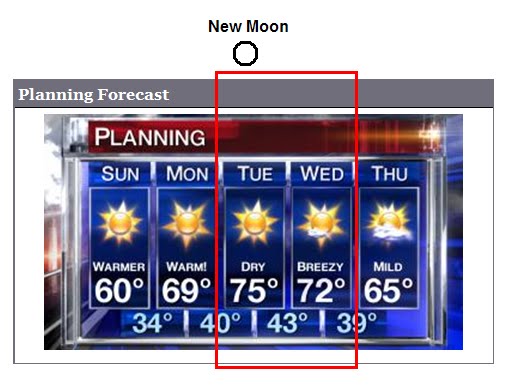
Next week we are looking at prime temperature increase mixed with a full moon on Tuesday. Tuesday and Wednesday could be the start of some prime time fishing. Just look at this weekly forecast. I dare say this is the best outlook in several months. The fish have been waiting for this just as much as anglers. Water temps will increase and a lot of species will become more active.

The Full Moon appears on Tuesday, which will draw out prime walleye fishing in the evening hours, but my guess is that water temps will reap the full benefit of this warm spurt on Wednesday. The only way to know for sure is to fish every second from Monday to Friday. If not for bills, responsibilities and financial self-preservation I would not show up for work at all this week.

(Above: Modified screen shot from 9News Weather. After back-to-back blizzards last week, this is almost unbelievable.)

If for some reason you have not spooled and re-spooled your reels a hundred times over as I have during this 5 month ice age reoccurrence, you may need to visit your tackle box and do some inventory. If you do have your gear ready and just waiting for an optimum time to start fishing…that time is now.

Disclaimer: This is Colorado afterall and even with 75 degrees forecast on Tuesday, we may see a storm that still brings two or three feet of snow anytime before the end of April.

Good luck and good fishing. Hit the water while the hittin' is good.

Gearing up for spring…for months now.

When it comes to Colorado weather folks just have to roll with the punches. This year has been a knock down drag out blizzard fest. Sun then snow and then more snow with 20 and 30 degree drops in air temp within a 2 or 3-day span. This has slowed my outings down a step but not stopped me from venturing out.

One thing that helps me get through the winter season (other than nearly killing myself on a few trout outings) is buying new fishing gear. Being a workaday slob with bills and no sponsors I am limited on what I can afford and use. “The best you can afford” mantra is one most anglers embrace as well as understand. When you buy as much gear as I do there is a tough choice between high quality and bankruptcy.

The Catera by Shakespeare

One of the new reels I picked up this year was the Catera by Shakespeare. This is a 6-bearing reel in the 30-dollar range that fishes like something in the 50 or 60-dollar range. The pinion gear is brass and the line roller is titanium…this says quality in my book. The rest of the components are aluminum and dense plastic for a lightweight feel.


Now I am not saying this reel stacks up to Pflueger or Quantum reels that generally go for 60 and above (higher price generally equates to more titanium and stainless steel). I have purchased the higher end reels and love them. However when it comes to gearing up in spring I have to make a choice between one high-end item or multiple lower priced options that complete the needs of the new year. If the high-end stuff gets damaged falling off a cliff, stolen or lost I could be out of the game. The real trick to “fishing on a budget” is finding quality products in your own personal price range. It is my opinion that the Catera does this. A few test runs have already impressed me enough to pick up an additional Catera for my jig setup. Two reels for the price of one in the retail world is a winner in my book.

Please understand that I have trashed reels in the 80-dollar range with one simple act of stupidity or theft and nearly had to mortgage the farm to replace them. I have no doubt that any reel that finds its way to my hands will be reduced to scrap or vanish within two or three seasons. This is no fault of the manufacturer per say as much as it is the fact that I can be dumb and clumsy at times…this may be an understatement. So until I hit the Lotto and can afford 4 or 5 setups in the 1500-dollar range, I will continue to look for value and bargains.

Note: I am not the go-to source on equipment and many others do a much better job at this. Pro anglers that receive a lot of equipment for free have a supreme advantage over the not so famous weekend warrior-fishaholic crowd like myself. What I do offer is an objective opinion outside of the commercial barrage you get from people trying to pimp a particular product to support the fancy patches provided by their sponsors.

My name is Matt and I’m a fishaholic.

Underwater Compilation Video…Test Run

There is always room for improvement and this year I hope to add another element to my fishing videos with the underwater camera. Getting quality underwater footage is not as easy as I first thought so a few test runs and practice trials are in order. Hopefully this additional layer provides more of a fish’s view as well as invigorates people to release more fish.


If you have not been to my youtube page, please check it out. Rates and comments are encouraged as well as any ideas from my massive viewing audience of 4 or 5 people on how to improve things.

http://www.youtube.com/user/drkmindz1

I greatly appreciate the kind words as well as the few jabs and jeers. Thank you all for stopping by.

Good luck and good fishing!

Friday, March 26, 2010

Pure Desperation…a deodorant for desperate anglers

My season started out pretty lame this year. A few trips were complete skunkers and once or twice I flirted with death. I started getting concerned that the fish could literally smell my desperation as I approached the water…especially the hard stuff. Hunters use many products that mask their scent in the wild but what about us anglers? What do we use? In attempt to fill the void and help out my fellow angling brethren I introduce “Pure Desperation”, a deodorant for desperate anglers.


No more approaching the water reeking like some hard up-no chance geezer at the singles club. This deodorant may not give you actual results or even a boost of confidence. We do not guarantee that this product will help your fishing results. But when anglers are truly desperate, we will try just about anything.

Desperate anglers, finally there is a deodorant for you!

Wednesday, March 24, 2010

Let’s get to know…”Gizzard Shad”

How cool are fish? Each species is different and has biological differences that control so much about where they live and why. Knowing these facts will help dial in the location and patterns of the fish you seek to catch. Fish identification is just the start. Learning the biological aspects helps us catch and preserve this amazing natural creature. Please bear with me and my poindexter excerpts of “Let’s get to know…”.

Let’s get to know “Gizzard Shad”

Shad is an excellent source of forage and routinely stocked across the United States. Although this species thrives better in the warmer southern climates it is also stocked in a few Colorado waters to boost the bellies of predator game fish such as large and smallmouth bass. Walleye and other species will also benefit from stocking shad. But what do we really know about this fish species?


There are several variations of the shad species (American, threadfin, gizzard shad and more) for this discussion I want to focus on the gizzard shad which is more common in Colorado.

Description:

The gizzard shad or Dorosoma cepedianum are slightly “diamond” shaped with a blunt snout and extended bottom fin similar to most shad species. Gizzard shad generally have a black dot behind their gill plate but this marking can fade in some cases. Very similar to the threadfin shad, the gizzard variety The gizzard shad has an upper jaw that protects the lower jaw and do not have the yellow coloring on the fins as in the threadfin. The easiest way to distinguish the two is by the anal or bottom fin that has 30 to 35 rays as where the threadfin only has 20 to 25 rays.

Biology Facts:

Gizzard shad are planktivorous meaning they feed on plankton rather than bugs or smaller fish. However, some adult gizzard shad have been caught by anglers using flies and other means so it is easy to deduce that large shad may have a more varied diet that consists of protein.

Shad will often form large schools that attract predator fish. In the summer months anglers will actively seek out large “boils” on the water surface created by predator fish feeding on the school of forage. This binge feeding is referred to as “busting” and fairly common at places like Pueblo Reservoir where shad populations stay fairly consistent.

Shad are not considered a very palatable table fish compared to bluegill and perch but predator game fish benefit from such an abundance of forage at a time when water temps and fish metabolisms are at their peak.

Spawning:

Spawning occurs in the late spring or early summer in Colorado when water reaches 70 degrees in shallow water. Eggs and milt are released within the school of fish and fertilization takes place in the open water without any distinction between the individual breeding adults. The eggs are adhesive and attach themselves naturally to structure hatching in 4 or 5 days.

Complications of shad stocking in Colorado:

Shad are prolific and can reproduce in abundance when the water reaches 70 degrees. This high reproduction activity can displace other types of forage. Several water systems with shad may not have adequate drainage protection and the shad escape into ditches and can migrate to other waters where they are unwanted.

Another problem is the fact that most shad species will experience population die off when the water reaches below 45 degrees. When lakes freeze over the oxygen levels start to dissipate. This can also cause large die offs in the shad population.

(Above: This is somewhat of a routine sight for me this time of year depending on how bad the winter season was. I can’t help but be concerned every time I see a massive shad die off and have to remind myself this is not a problem with the water or lake. If you see dead shad in large numbers do not be overly alarmed. This is often a natural occurrence. If you see other species dead along with the shad…well then you have a much more serious issue.)

Smaller lakes may need routine stocking every year or so to keep the species viable and ensure reproduction in summer months where water temps are more agreeable to them. Stocking shad can really pump up the volume in regards to game fish weight and overall health. But shad are not the solution for every lake. Shad do best in large reservoirs and other species’ habitat needs should be weighed beforehand.

I hope you have enjoyed this segment of “Let’s get to Know…”

Acknowledgements, sources and reference links:

http://www.bassresource.com/fish_biology/gizzard_shad.html

http://www.tpwd.state.tx.us/huntwild/wild/species/threadfinshad/

http://www.fws.gov/r5crc/Fish/zc_doce.html

Pontooner update: Fine-tuning the mods.

(Above: Some renderings of the tooner in various stages of design. CAD "computer aided design" is one of my forte's and how I pay the bills outside of my fishing world. It really helps being able to storyboard these adaptations before going into the prototype phase.)

Last year I released an article on the website called “Pimp Your Pontoon”. That article was so popular that I received two, maybe three e-mails about it. The article itself covered some pontooner basics as well as some add-ons that helped make fishing a bit easier. After toning around for a few years now, I thought it would be nice to update folks on some pontoon additions that have been improved, added and even future tooner additions. (link to article below)

http://www.coloradocasters.com/PimpYourPontoon.html

The wheel unit was a great addition and an enormous help in regards to reaching lakes further away from the parking lot. It is just a bike wheel attached to the boat. But after two years the inflatable tire fell apart. It literally fell apart spokes and all. The bike tire version of the prototype also required constant maintenance to stay full of air. What about cactus trails? Clearly some improvements could be made.

Solution: A solid wagon tire was used to replace the inflatable one and I kick myself for not doing it sooner. The ride is not as smooth but can take a lot more punishment. Still a few tweaks before it is 100% but getting there.

The camera holder for the pontoon boat is not the easiest item to find. The ones that I did find were expensive or not as durable as I would have liked. After some trial and error a homemade version seems to be doing the job nicely. Not as cool as a pivoting arm with springs and elbow joints.

Recent Improvement: Once fitted with a longer post it works even better to get the perfect vantage for videos and photos.

The front platform has been kicked up a notch and is working really well. Rather than having a chair and front platform to stand on, the chair has been removed and a larger platform spans across the entire frame. More or less it is like having a flat deck to stand and cast from. It’s just another one of those crazy cool ideas for the pontooner that really makes sense.

(Above: The tooner with the new and improved mods for 2010. The deck will possible go through several variations before I settle on the final design…prototype one is working out great so far. I expect to see a lot of people switch over to the flat deck scene on their pontoon boat once this idea catches on.)

The rod holders are still being tweaked. The front rod holder is too low. Add an extension piece bolt it all back together. That will make the front rod holder damn near flawless. I still need to add one to the other side. This one will utilize the Scotty brand rod holder I picked up for 10 bucks. Just need to adapt it to the boat. That is always the kicker.

The multiple rod holder is working as well as intended. It transfers from my belly boat to my pontooner with a strap adjustment. It holds two rods and that can be a big help when I am switching species or trying to dial in the bass.

Modifications that are being scrapped or sent back to the drawing board:

The extended seat unit was scrapped or at least shelved for now. It added too much weight and wasn’t used or even needed as much as previously thought. My first prototypes were also unstable and just going to get me into trouble. Maybe if I can come up with a lighter seat post and fabricated clamp.

Anchor systems that are effort free and not too elaborate still seem to evade me. The best thing I have come up with so far is a spool and crank option using a large plastic spool and an old reel handle. Once I get the locking pin in place and a better clamping system we may see this go into field-testing. For now the sloppy old school method will have to do.

Hopefully this pontooner update will motivate other anglers to think outside the box in regards to fishing modifications. Good luck and good fishing.

Tuesday, March 23, 2010

Rebound Sunday-continued, “Part Two”

Epilogue: This is part two of the Sunday Rebound Saga. Part One discussed bass in one lake as where Part Two will cover the rest of the story on another lake. I also want to mention spotting Team JW out in the wild but I was too exhausted and not sure if he would have appreciated my interrupting his fishing to yak it up a bit. Team JW and James P are people that I really look up to on the fishing and forum scene. I should have at least said hello.

Sunday rebound Part Two:

Pulling off the main lake was a lot muddier than going in. The sun was pouring on the heat. Frost had faded and shortly after I was lugging the tooner across the trail and to the parking lot and then to the other section of ponds. This section of ponds seemed slightly cooler in regards to water temperature simply because of the treeline on the south side that shields the sun just enough to take things down a degree or two. At least the trails were dry even if the shoreline was not.

Starting at the west end of the lake I moved my way east cast at the shoreline and running the lure into the small trench. This was not the same type of vertical structure that had proven successful on the other lake but this shoreline was the most identifiable geographic structure that I could see. Dried cattails, branch and tree structure were also present and so inviting that an angler has to cast over there at least once or twice to see if anyone is home. Cast, cast, nada.

After an hour I was starting to think that I made a bad choice by pulling off the other lake and lugging all the gear over to this one. Then I look over my shoulder and spot a small school of sunfish congregating near by. Thankfully I had a rod geared up for baitfish and went to town. You see I have an addiction to panfish. Kind of expected this to be a bit early for bluegill and sunfish to be out so seeing this small school was sheer bliss.

(Above: Not too shabby and glad to get my season going with some decent pans.)

Panfish are not very selective and will hit just about anything small enough to get their mouths around. Typically I use fly patterns, baby shad plastics and micro sized grubs. These fish were not as aggressive as they will get come July but a few were willing to take the lure and pose for some shameless photo taking.

(Above: Here is a second bluegill with a darker color pattern and hunched body. As much as I love to catch bass in the warm water scene…I think these fish are just as spectacular in their own right.)

A number of bluegills were respectable in the 6-inch range with a few just beyond that. Didn’t see anything over 8-inches but maybe they will be present closer to the spawn. Words fail to describe my admiration for this species in regards to brilliant color and its importance in the overall ecology of any lake.

By now the sun is fading and so is my energy. Realizing that I still have to lug all of this gear back to the main parking lot, there wasn’t enough gas in the tank to fish another hour and still make it back to the parking lot. To be honest I was way past the point of no return in regards to my energy levels. My arms started rowing for shore with my will finally conceding to the fact that I needed to return to shore.

To port or not to port…that is the question

Here is where I run into a quandary. The shoreline on the eastern edge is dotted with three anglers. Both port locations are covered with one guy smack dab in the middle of the other two. As I am rowing my brain starts scrambling with a way to reach the eastern shore without making any enemies. Being courteous and respectful is paramount in regards to the fishing code, a code that has long been discarded by so many anglers in Colorado…that is a shame. The quandary here is that the three anglers are blocking the port in points and only about 150 feet between them. Had this been an official boat ramp the watercraft clearly has the right of way. 100 feet of distance from watercraft and shore angler is also part of lake rules in a lot of places, hence why I try to maintain this area of space regardless of whether it is enforced or not. So what is the right thing to do? At that moment I was not sure. If nothing else I might have to port on the far north or south side and walk an extra 500 feet or so.

Then I hear one of the shorebangers start blurting out some jeers. “Looks like that guy thinks he is in a triathlon or something!” He went along with some other stand up that I could not quite make out or even care too.

“Nice” I whisper to myself and change course.

Now I am going to do my best to split the distance on the eastern shore between the guy standing on port out spot number one and Mr. Jokes. I pulled it up on Google Earth and measured it out as a 75-foot separation between the two. This was only 25 feet off my original mark. (Had I known that Team JW was at port number one…well I would have ported on the north side and let them take the tooner for a spin while I took a nap on the shore. It wasn't until I had already ported out when I noticed-or at least think that was JW.) Mr. Jokes let out a few more comments that seemed to get more disgusted as I approached. Then eventually him and his buddy moved off to fish another section of the lake. No skirmish or hostile confrontation, which was a refreshing change from last year.

Anguish and labor…the downside of hauling all this @##%%^ to the water.

The pontooner doesn’t seem all that heavy at first. But after a few hundred steps the weight and pain start to sink in. The deck board adds a few more pounds and requires the handles to be pushed all the way forward. My wheel unit design is at the end of the tooner where as the Scadden model (that design is far superior to mine in many ways) is center based. This means that the weight is not displaced across the frame as much as it is focused on my arms. After hauling, fishing and then hauling again most of the day I was only able to haul about 1500 feet before taking a rest. Then 1000 feet spurts after that before reaching the truck.

My name is Matt and I’m a fishaholic.

Early season bass slammin'....'bout time

Epilogue:

March is one of those months that can serve up sunshine one day, snow the next and then sunshine again. Take this week for example; Temperatures worked their way up to 50, almost 60 degrees only to drop back down to 20 degrees Fahrenheit or less by Friday. But by Saturday the sun was out and temps climbed back up near 50. Conditions felt “nice” but the water was still dealing with the aftermath of the storm. Fish were shaking off the change in barometric pressure on Saturday…action was slow. At least for me on the spots that I chose that day. One spot. The last pond that I checked seem to show promise with visible signs of baitfish. Cast, cast, one little bluegill.

Rebound Sunday

Sunday morning came and I had to venture out again. Weather called for near 60’s in the air temp department. After scouting a number of lakes on Saturday, I focused on the area that had the most activity. Hopefully an extra day of sunlight would stir up better action. That was my hope as I drove out early ready to face another day of absolute dejection.

The early morning gear up was a bit frosty. However it paled in comparison to the near blizzard conditions that hit the Metro and foothills area just days before. Saturday had thawed things out and I had the pleasure to gear up over frosted mud rather than snow or mucky ground. I might have actually grinned for a moment seeing the sun lift higher in the sky and clear blue skies with only two cars in the parking lot.

“Man, I just want to bottle all of this up and save a taste of it all for those hot July and August days when summer lasts forever.” Ok I didn’t really say that but that is exactly what it felt like. The boat was loaded, hauled and launched. Getting on open water was pure bliss. Pure bliss. Like seeing an old friend after years and years or snuggling into an old pair of shoes. Cast, Cast, BAM! A healthy chunk hammered the bait.
(Above: Nice chunk to get the day started. Not a brute but after the early year struggles that I have had…this fish was like a B12 shot of confidence!)

The fight was steady but sluggish. Bass typically don’t want to get all rough-and-tumble early in the year. Saving energy is key right now for them. I do my best to oblige with a quick pull, photo op-lite and release. Catching one good fish can make all of the difference in regards to the moment, the day or even the season…it is simply a matter of perspective. This one fish meant a lot to me because it seemed like forever since I caught a bucketmouth.

Having the skunk beat takes off some pressure but formulating what made that catch happen is the most crucial aspect of that first catch. Color, speed and especially structure type may be the clues to catching more fish. This time of year the structure type is more important and in this particular lake you have a lot of varying structure types. Shallow weedlines and stumps that were action packed in the summer rarely are good in colder periods but I still cast to them if I have time. What I focus most on is vertical or deeper structure this time of year in areas that draw heat. I could see this clearly by areas where the snow had faded. This is where I expect to find bites. Maybe the fish here are more active or fish simply congregate to these areas preferably. Large dirt or rock banks, Island structure or even dark trees submerged that act like solar panels make water warmer. Fish just so happen to be cold blooded so as the water warms the more their appetite grows. Putting simple pieces of the puzzle together help everything else fall into place. Keying in on warm structure points I was able to find some active fish.

One fish nailed the grub on top of the water and I saw the whole thing happen. I love it when that happens. The fish was following the lure as it ran slowly past some submerged tree structure and a large point. It was a perfect place for a fish to be but my cast seemed to come up empty in the hit department. Then I saw the fish trailing. I kept reeling and then stopped the bait about ten feet or so out. The fish clobbered it. That fish I just took some video footage and let her go. Hopefully I get some time to edit\post a few clips on youtube and the blogilicious but to be honest this is not full video montage material, really more of a test run on some new gear.

Another presentation that I love here is the jig combo (skirted jig in the ¼ to ½ oz range with a plastic trailer) really it is one of the worst choices for this lake due to the heavy weed-matte on the bottom. Vertically speaking however this thing can really dig out some stubborn fish.

In the deepest water where structure meets the bottom of the lake I get a heavy thump on the jig combo. This fish had some hawg’ness and lunged for the bottom one and a half times before landing. Healthy fish.
(Above: Finally I get to do some mean mugging shots with some decent fish. ‘Bout @#$%^ time!)

A total of five bass were caught before heading out and moving on to other water. Just in time too it seems as the noon rush hour seemed to descend upon the lake. The parking lot was filling up right along with the increasing air temp.

My fish finder is on the fritz which is what I use to take water temp…this is crucial as we move forward. My guess is the water is near 40 degrees…but I hate guessing, especially this time of year. Next weekend I should be able to get some actual water temps and give folks some news they can use.

My name is Matt and I’m a fishaholic.